
Think about this for a second.
A customer walks down a busy shopping street, phone in hand, looking for:
- Best sneaker stores near me
- “Organic skincare near me” “electronics store near me”
And in seconds, Google returns a list of businesses.
Now the million-dollar question is-
Do your stores show up in that list?
Because if it doesn’t, your competitor just won a customer you could have had.
This is exactly why local SEO and ecommerce SEO for brands has become such a big deal, particularly for companies that operate both online and offline. Local SEO connects your digital presence to your physical foot traffic, whether you have retail outlets, franchise stores, pickup centers, experience zones, or showrooms.
And frankly? The vast majority of e-commerce brands are still sleeping on it.
They spend fortunes on Meta ads, influencer campaigns, and flashy websites while ignoring that thousands of high-intent local customers are literally searching for products nearby every single day.
The stats make it a no-brainer.
- Google says searches for “near me” have exploded in recent years.
- About 76% of people who search for a local business visit one within 24 hours.
- Almost 28% of local searches result in a purchase.
- Mobile local search is more likely to show buying intent than general search.
Which means local SEO doesn’t just drive traffic.
It brings in people who are already halfway to buying something.
And what about e-commerce brands with physical stores? That is insanely valuable.
So let's break down the most effective local SEO strategies for e-commerce businesses, explain how they work, and understand why they matter.
Why Local SEO Matters More Than Ever for Ecommerce Brands
Many e-commerce businesses still think local SEO is only useful for restaurants, salons, dentists, or cafes.
That is old thinking.
Local SEO is extremely important if your business has a brick-and-mortar presence, especially when working with an experienced SEO company for ecommerce sites that understands how online visibility translates into in-store sales.
This includes:
- Retail stores
- Locations for pickup
- Warehouses with local delivery
- Franchised outlets
- Experience centers
- Temporary stores
- Distribution centers local
This is why.
Modern Customers Shop Both Online and Offline
Today, the customer journey is a mess.
People simply don't:
- Search.
- Buy Now
- Go away
Nope.
Instead they:
- Find products on Instagram
- Google reviews comparison
- Find it in local stores
- Visit the store in person
- Read more reviews in the store
Then buy at the final.
It’s a strange mix of online and offline stuff.
And local SEO keeps you visible in all those moments.
For instance:
A customer can search:
Best gaming laptop in Chicago
They might not buy online right away.
But when your local store shows up with:
- Good reviews
- Real-time inventory
- Directions
- Photos
- Current business hours
…you become the path of least resistance.
Convenience prevails.
Pretty much every time.
Google Business Profile: Your Digital Storefront
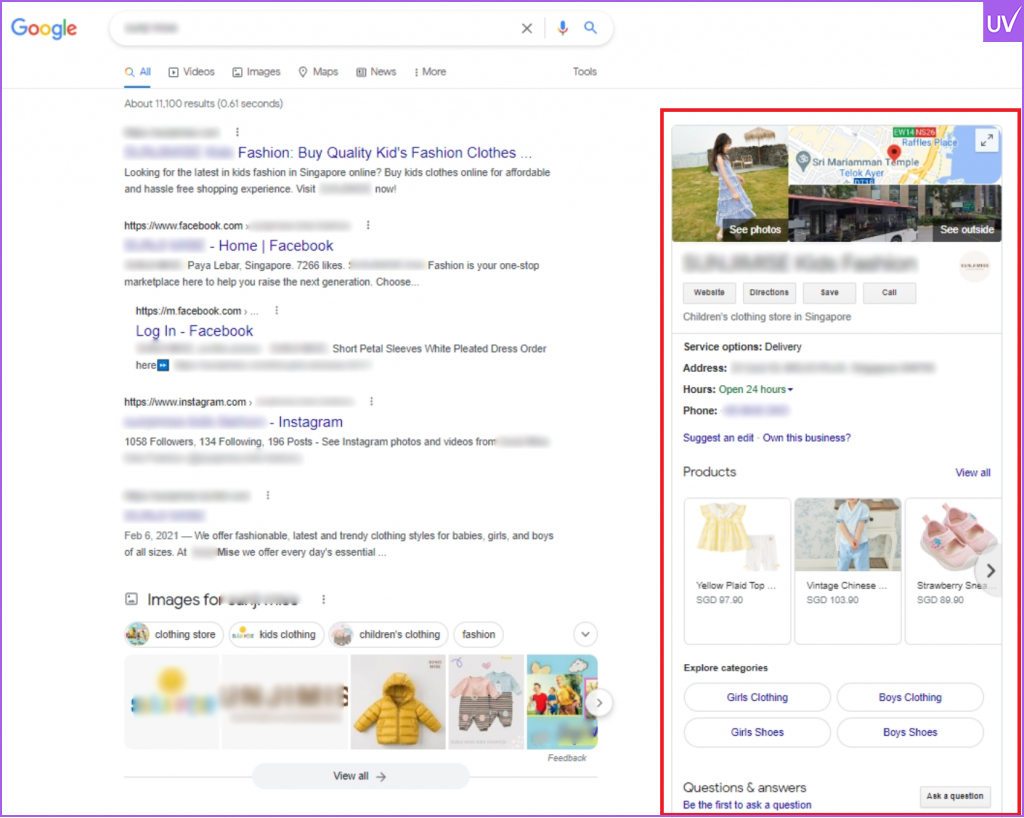
Let’s be brutally honest here.
For local customers, your Google Business Profile (GBP) is probably more important than your homepage.
Why is this so?
A lot of users never even come to your site first.
They work directly with your:
- Google Maps listing
- Reviews
- Photos
- Open Hours
- Directions
- Call button
That small business profile is a real powerhouse for local SEO rankings.
Why Google Business Profile Matters So Much
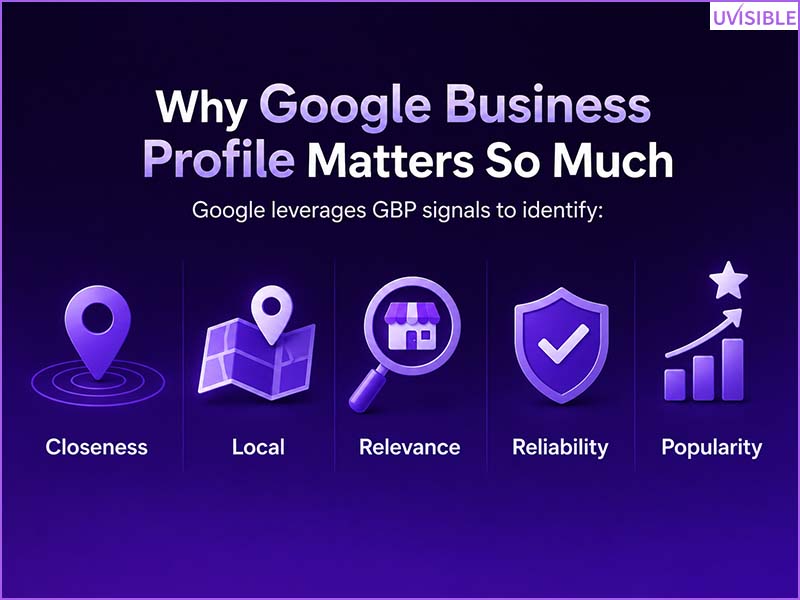
Google leverages GBP signals to identify:
- Closeness
- Local
- Relevance
- Reliability
- Popularity
Google says of a poorly optimized profile:
“This business might not be reliable.”
A strong profile reads:
“This business is active, reliable, and helpful.
And Google rewards useful companies.
How to Fully Optimize Your Google Business Profile
The majority of companies only scratch the surface in this regard.
After adding timings and uploading a logo, they vanish into thin air.
That isn't optimization.
Abandonment is what that is.
This is what really counts.
1. Maintain Consistency in NAP Information
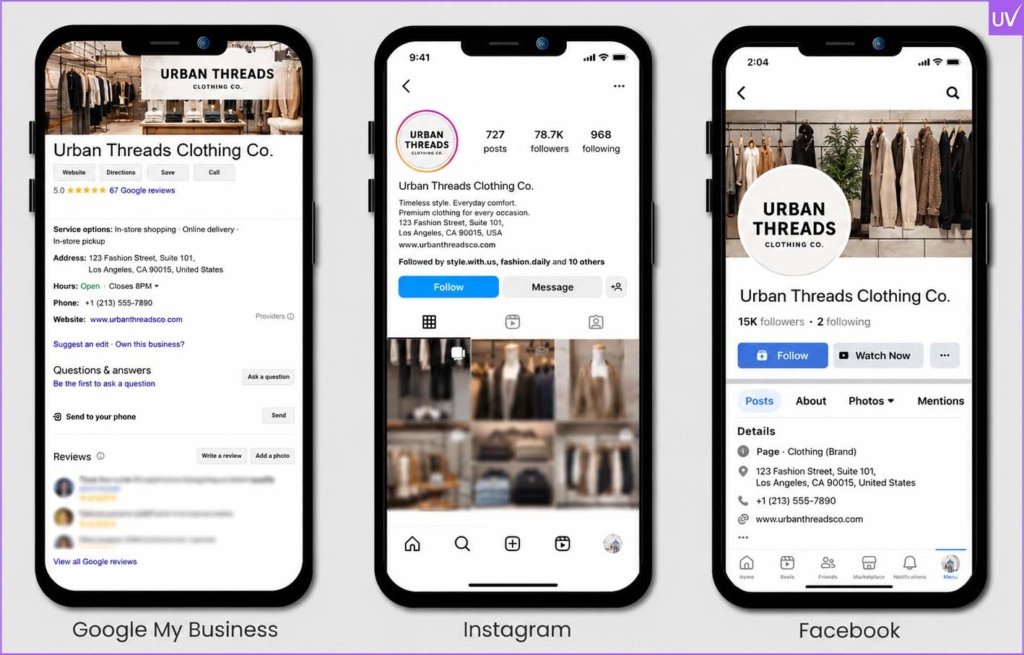
NAP stands for:
- Name
- Address
- Phone Number
Your details have to match everywhere:
- Website
- Google listings
- Social media accounts
- Directories
- Local listings
Search engines are confused by even the smallest discrepancies.
For instance:
- "Street" against "St."
- Outdated phone numbers
- Distinct store names
Local trust signals are weakened by these discrepancies.
Google places a high importance on accuracy.
2. Select Proper Business Categories
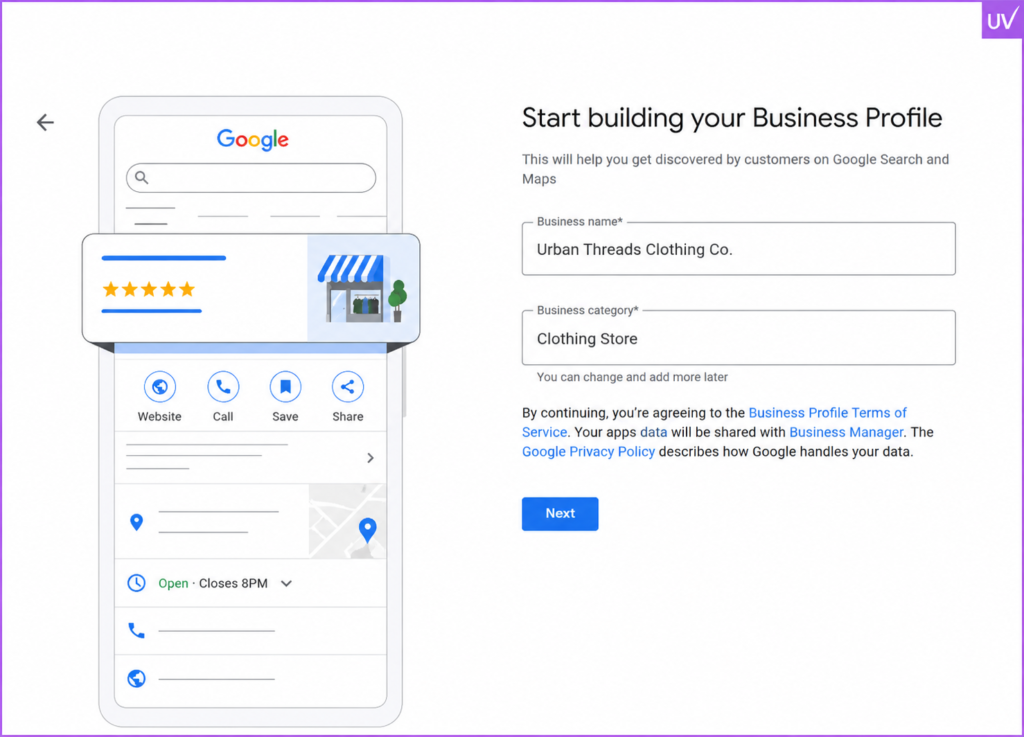
Your main category has a significant impact on your rating.
Select the category that most accurately reflects your main line of business.
Secondary categories for supporting services should then be added.
Example:
A sneaker company may utilize:
- Shoe Shop
- Sportswear Shop
- Store for Fashion Accessories
This aids Google in determining when to show your company.
3. Add High-Quality Photos Regularly
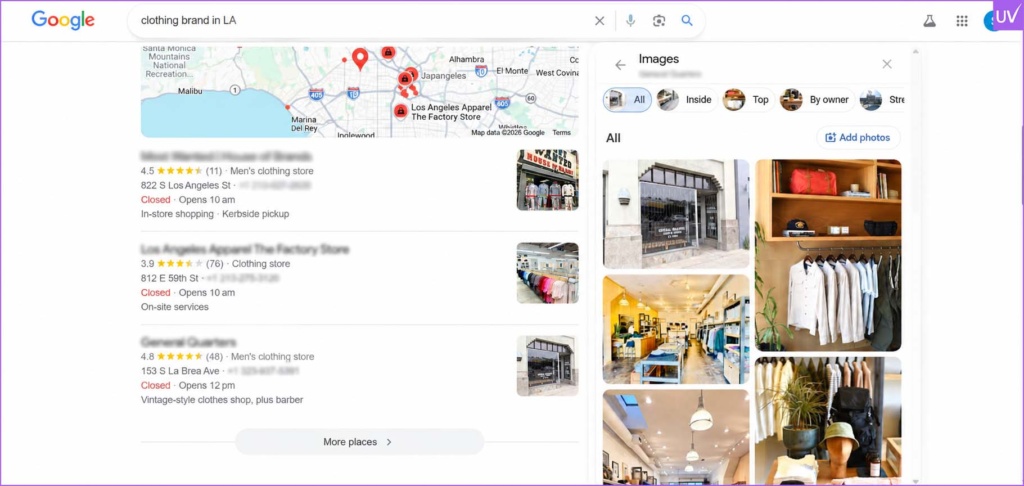
Most firms are unaware of how important this is.
Visuals are trusted by people.
If your profile has:
- Outdated stores with hazy imagery
- There are no interior images, which immediately causes hesitation.
In the meantime, companies that regularly update their photos seem more interesting and trustworthy.
Upload:
- Storefront image
- Product displays
- Interactions between employees and customers
- Seasonal décor
- Coverage of events
Stock photos are not nearly as effective as real photos.
…because clients can detect stock photos from another planet.
4. Write Keyword-Rich Business Descriptions
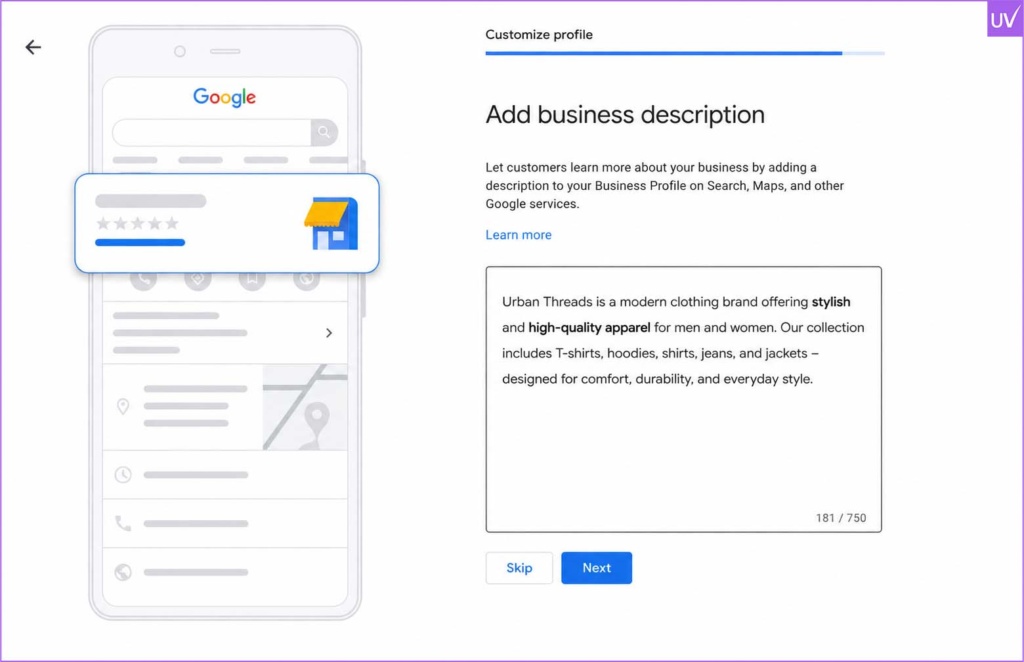
Naturally, your description should contain:
- Products
- Services
- Locations
Example:
"Uvisible provides e-commerce companies in New York, Los Angeles, Austin, and throughout the United States with digital marketing and local SEO services."
This makes it easier for Google to link your company to location-specific searches.
Don't use keywords like it's 2012, though.
Robotic crap is not what anyone wants to read.
Create Dedicated Location Pages for Every Store
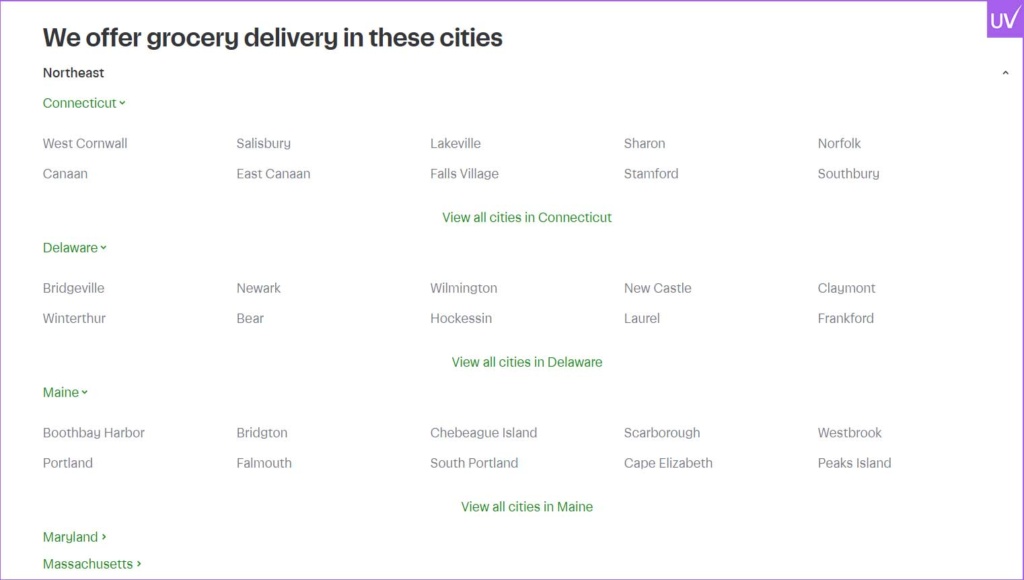
For e-commerce companies, this is one of the most significant local SEO opportunities.
Surprisingly, a lot of brands continue to make terrible mistakes.
They produce a single generic:
"Our Shops"
page with small addresses tucked away at the bottom.
That is insufficient.
Every physical location should have a landing page that is optimized for it.
Why Dedicated Location Pages Matter
Google uses relevance to rank pages.
If someone searches:
"Seattle's top electronics store"
Google wants to display a website with a Seattle concentration.
It's not a generic national page.
Location-specific pages, therefore, get better:
- Local rankings
- User experience
- Conversions
- Relevance signals
What Every Location Page Should Include
Accurate Contact Information
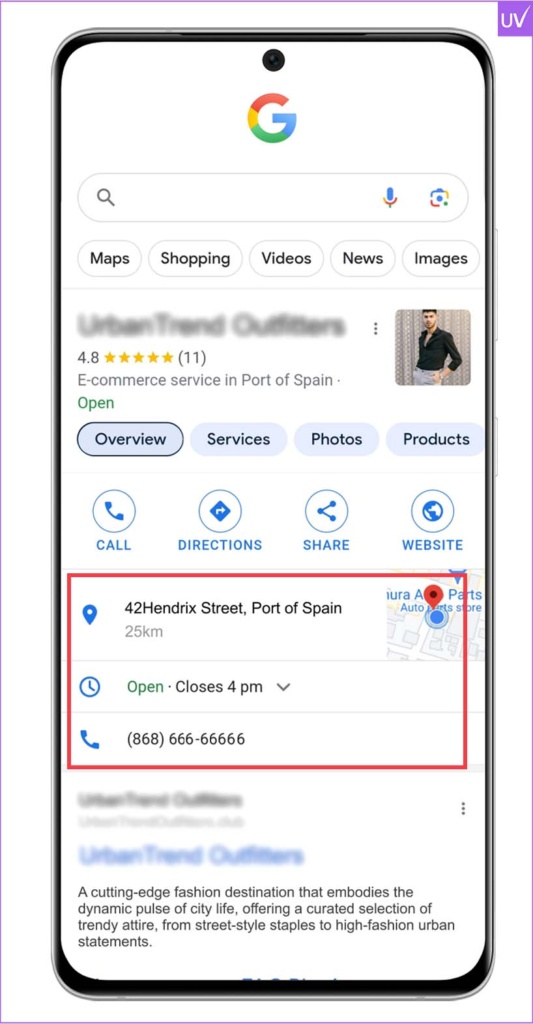
Include:
- Address
- Local phone number
- Opening hours
Easy? Yes.
Important? Highly.
Embedded Google Maps
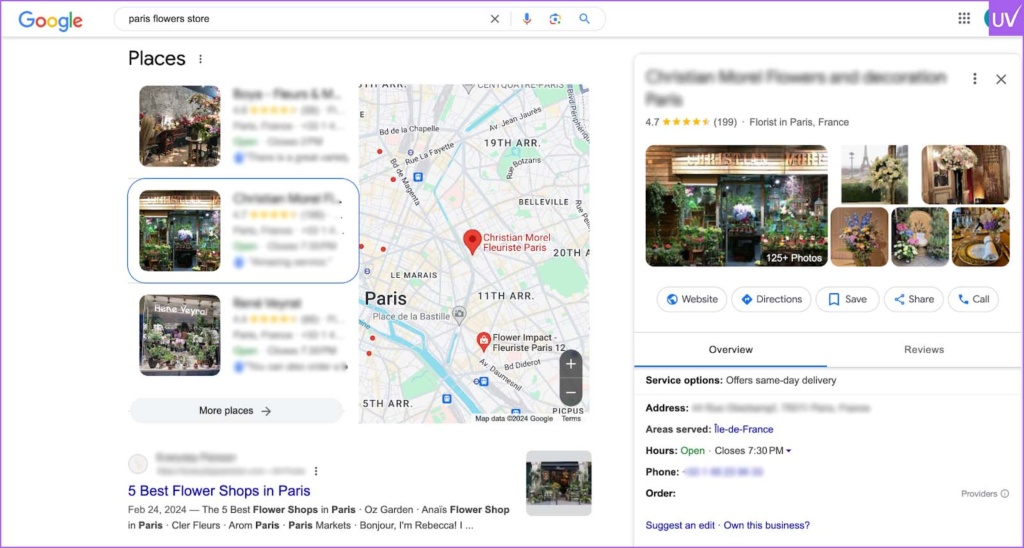
This increases usability and local relevance.
Users should quickly know:
- Where you’re located
- Parking availability
- Nearby landmarks
Reduce the discrepancy wherever possible.
Unique Local Content
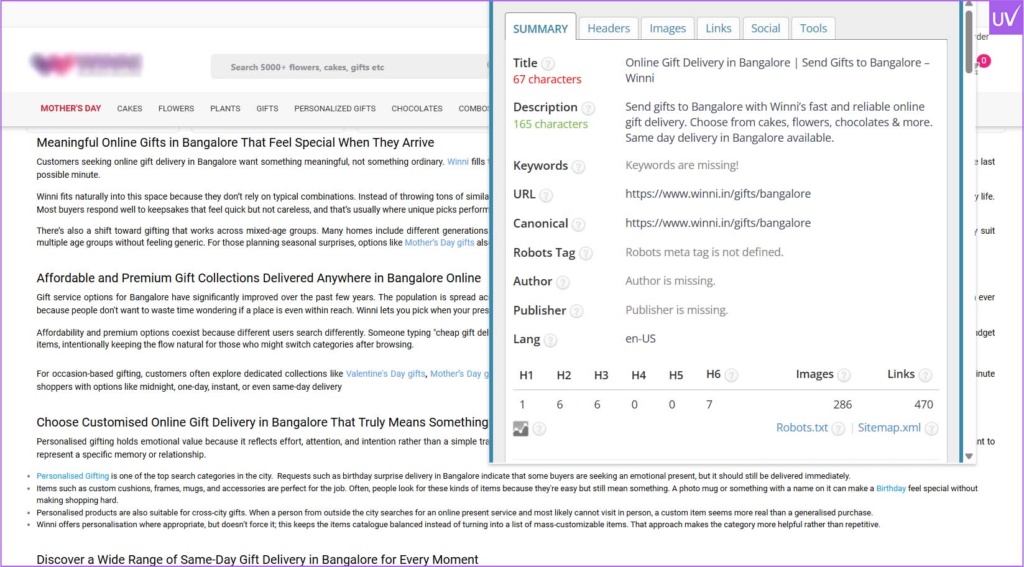
Avoid copying and pasting the same material everywhere.
Duplicate material is penalized by Google.
Instead:
- Mention local events
- Talk about local trends
- Cite surrounding communities
- Share local client testimonials
Give each page a truly local flavor.
Store-Specific Inventory Highlights
If one store concentrates on:
- Gaming products
- Luxury fashion
- Fitness equipment
Specify it clearly.
This increases relevance for product-specific searches.
Reviews: The Secret Weapon of Local SEO
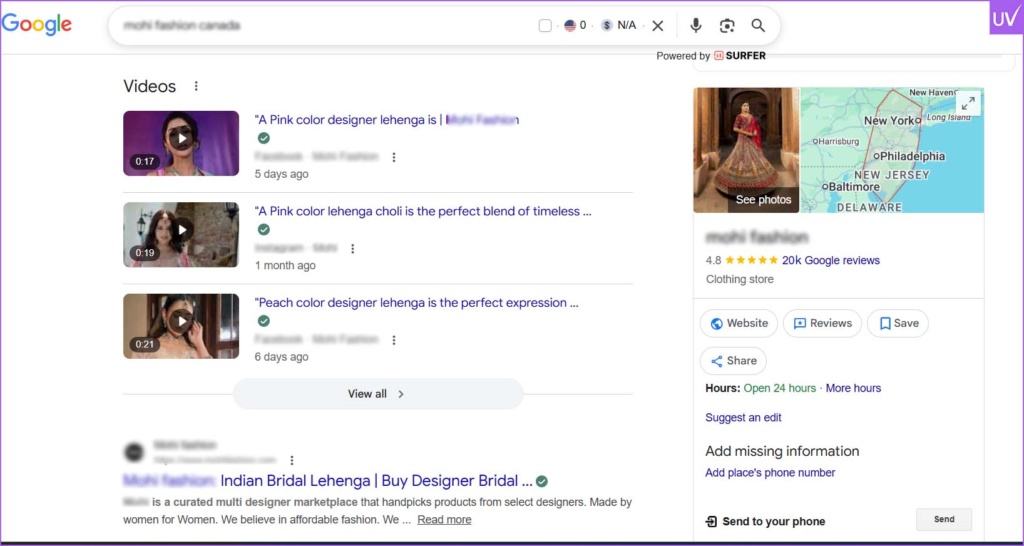
In essence, reviews are contemporary word-of-mouth advertising.
However, they now spend all of their time online.
And they are read by all.
Even those who say they don't.
Why Reviews Matter So Much
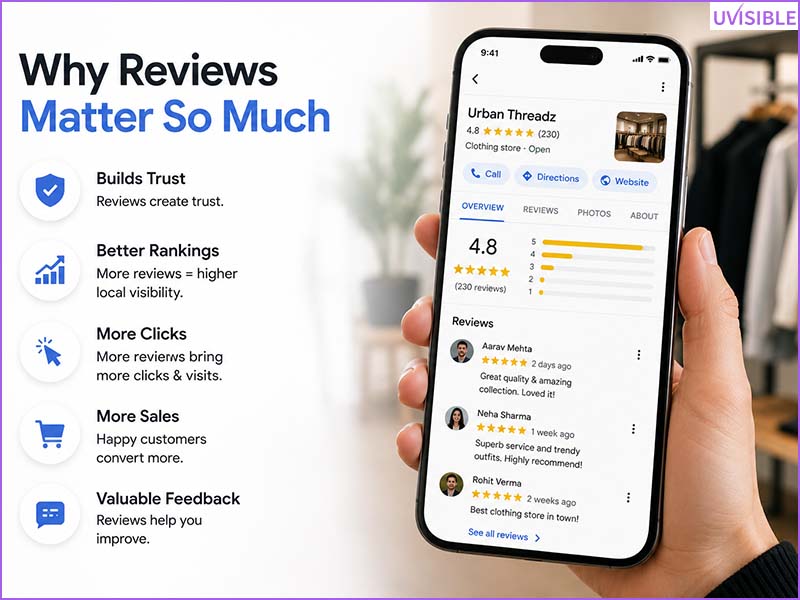
Reviews affect:
- Trust
- Rankings
- Click-through rates
- Purchasing decisions
Reviews are considered trust indicators by Google.
Better local visibility is generally correlated with higher-quality evaluations.
Additionally, consumers strongly rely on them prior to shopping.
How Ecommerce Brands Should Handle Reviews
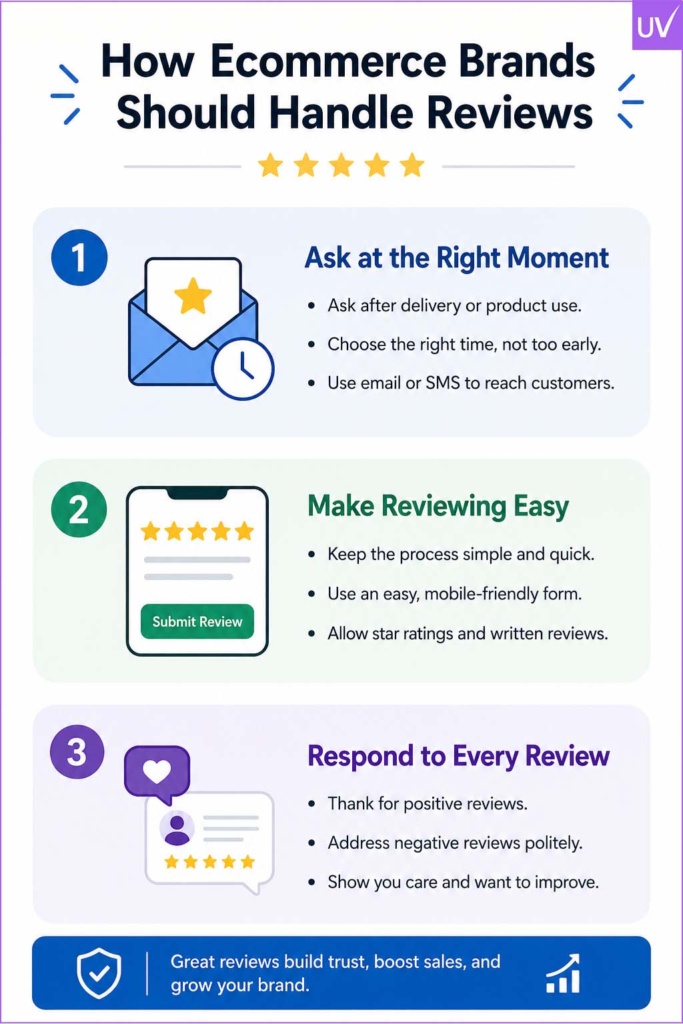
Ask at the Right Moment
Time is of the essence.
The finest times:
- After successful purchases
- Following positive support encounters
- Pickup experiences
Reviews are more likely to come from satisfied consumers.
Make Reviewing Easy
Don't force users to go through burning hoops.
Send:
- Links to direct reviews
- QR codes
- Email reminders
- SMS review requests
Participation is increased by convenience.
Respond to Every Review
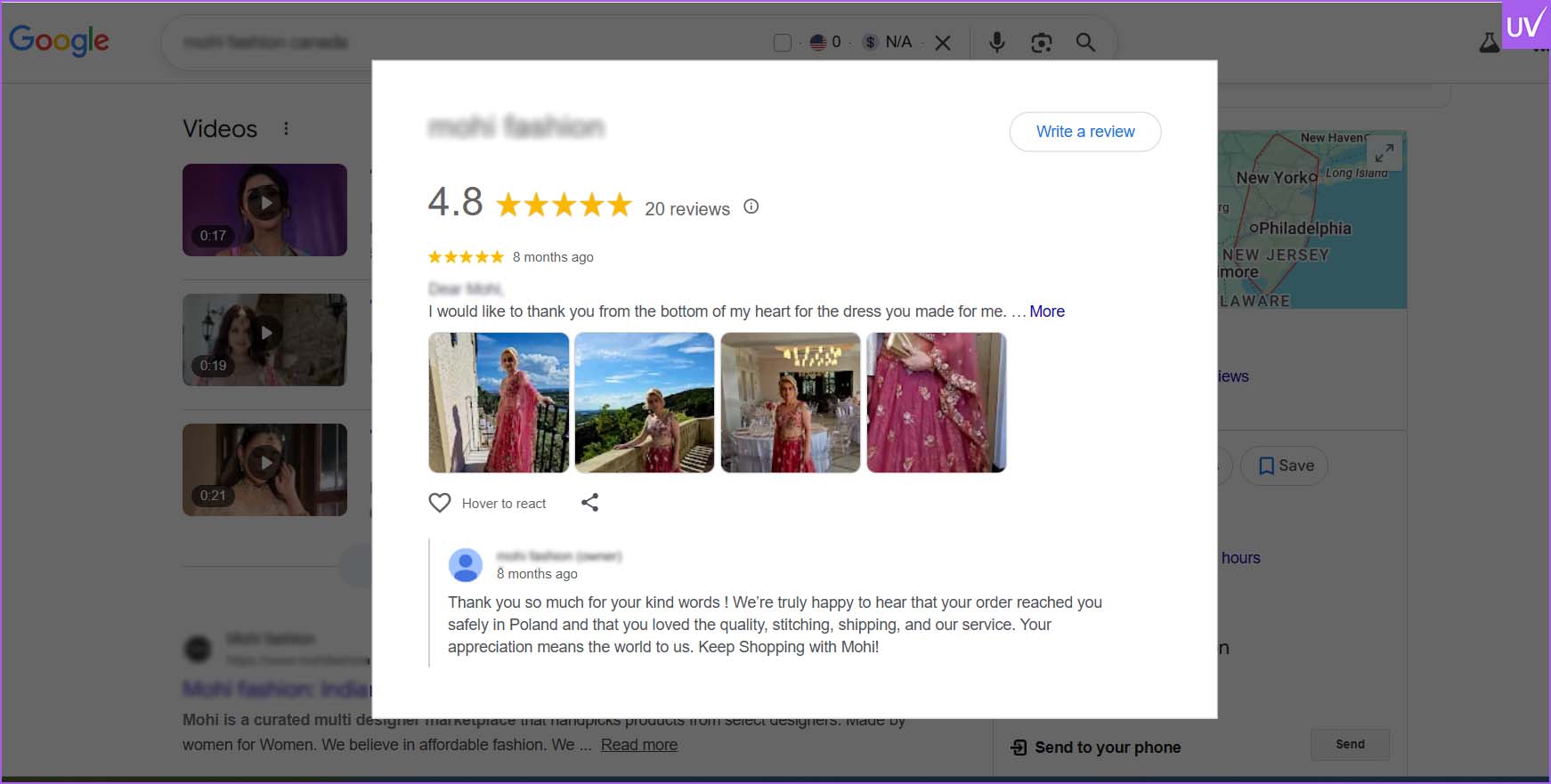
Positive reviews:
Thank customers with a personalized message.
Negative reviews:
Remain composed and solution-focused.
Never argue in front of others.
Nothing frightens consumers more than brands squabbling like reality TV contestants in review sections.
Hyperlocal Content: The Underrated SEO Goldmine
The majority of e-commerce blogs have an unbearably generic tone.
You've seen them:
- "2026's Top Fashion Trends"
- "The Best Electronics to Purchase"
- "The Ultimate Guide to Shopping"
Boring.
Forgettable.
No personality at all.
That is entirely altered by hyperlocal material.
What Is Hyperlocal Content?
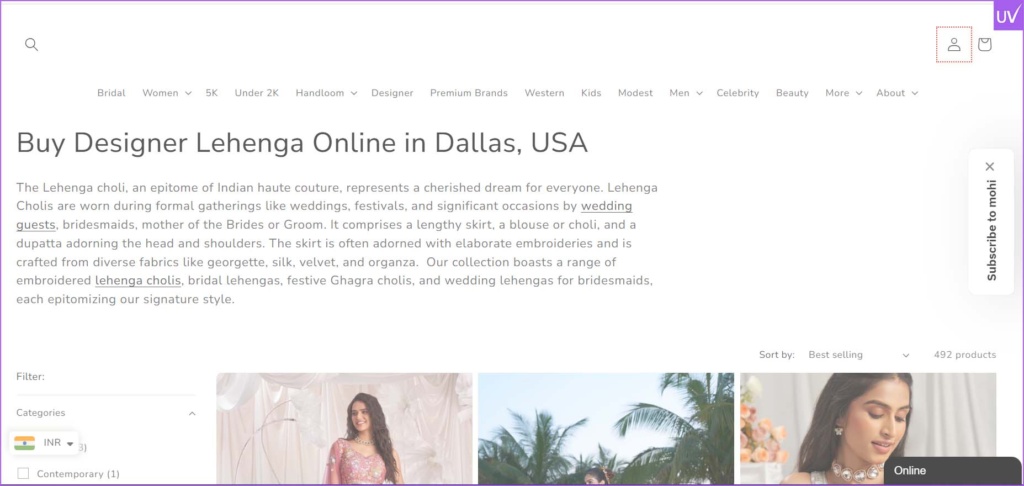
Its content is suited to:
- Particular cities
- Neighborhoods
- Regional behaviour
Examples:
- "The Best Winter Jackets for Snowstorms in New York"
- "Los Angeles's Top Fitness Trends"
- "Seattle's Best Rainproof Shoes"
Because it relates to local experiences, this content feels pertinent.
Additionally, engagement is fueled by relevancy.
Why Hyperlocal Content Works So Well
Localized relevance is given priority by Google.
Additionally, consumers trust companies that are aware of their surroundings.
A skincare company talking about:
"How Phoenix's dry weather impacts skincare."
Feels much more applicable than general guidance.
This relatability fosters trust.
Conversions are also fueled by trust.
Optimize for “Near Me” Searches
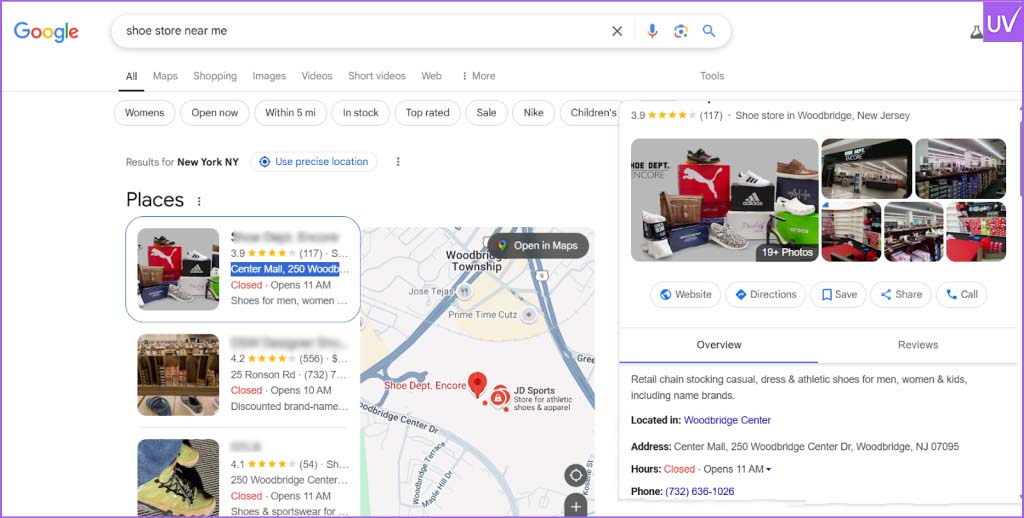
"Near me" searches are really valuable.
Why?
Due to the fact that they convey quick intent.
People searching:
- “Shoe store near me”
- “Buy a laptop nearby.”
- “Makeup shop near me open now.”
…typically seek out speedy fixes.
Compared to informational searchers, these users are far closer to making a purchase.
How to Improve “Near Me” Rankings
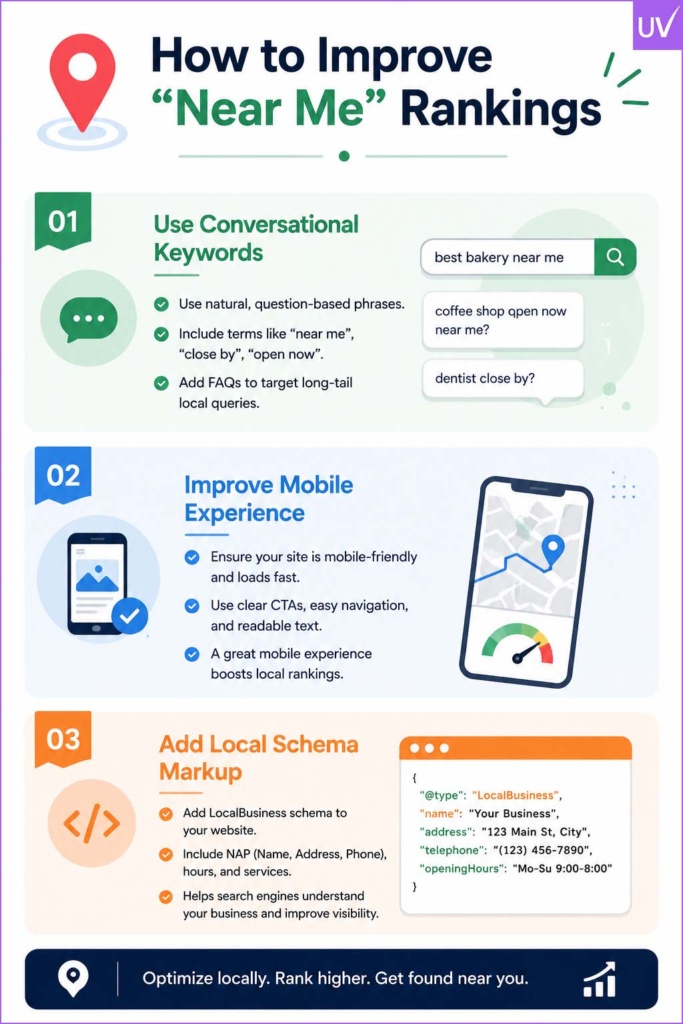
Use Conversational Keywords
These days, searches are conversational. Do local keywords research.
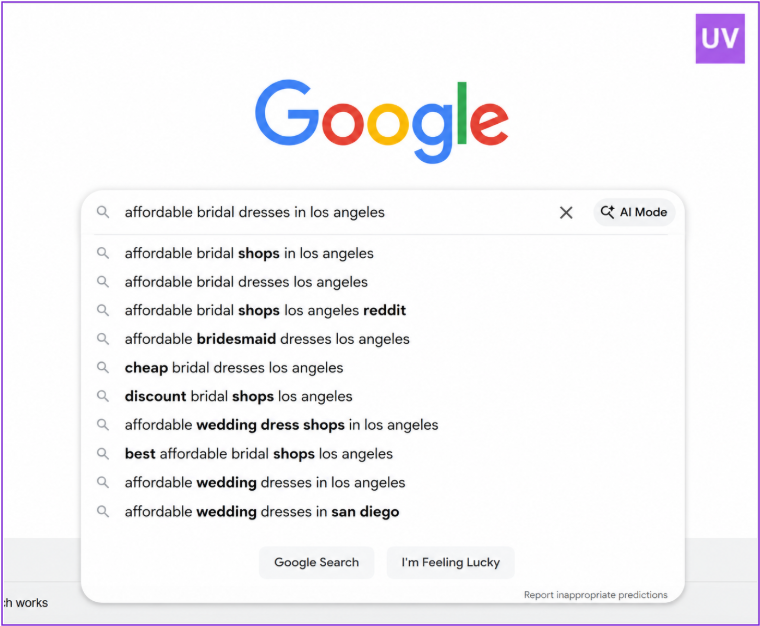
Incorporate phrases such as:
- Nearby store
- Pickup available
- Visit us locally
- Available near you
This is consistent with voice and mobile searches.
Improve Mobile Experience
The majority of local searches take place on phones.
If your site:
- Loads slowly
- Breaks on mobile
- Has tiny buttons
- Feels clunky
…users leave immediately.
Google notices those signals.
Quick mobile experiences get better:
- Engagement
- Rankings
- Conversions
Add Local Schema Markup
Local schema markup facilitates search engines' comprehension of:
- Business type
- Products
- Location
- Reviews
- Store hours
Consider the schema as additional context for Google.
Your chances of having high search visibility are increased.
Local Backlinks: The Authority Boost You Need
One of the most powerful SEO indicators is still backlinks.
However, local backlinks have even greater influence on regional results.
Why?
Due to the fact that they support geographic relevance.
Where Ecommerce Brands Can Get Local Backlinks
Local Media Coverage
Collaborate with:
- Local newspapers
- Regional blogs
- City magazines
Mainly during:
- Store launches
- Seasonal campaigns
- Events
Sponsorships and Community Events
Sponsor:
- Marathons
- College events
- Cultural festivals
- Workshops
These often bring mentions and backlinks organically.
Collaborate With Local Influencers
Micro-influencers with command over local audiences can bring:
- Awareness
- Backlinks
- Engagement
- Store visits
Because their audience is more trusting, smaller producers can occasionally perform better than large ones.
Voice Search Is Reshaping Local SEO
Voice search has altered how individuals search online.
Rather than typing:
"Boston's best café"
Now, users inquire:
"What's the greatest café in my area that's now open?"
Voice searches consist of:
- Longer
- Conversational
- Locally focused
Your content marketing strategy must therefore sound natural.
How to Optimize for Voice Search
Add FAQ Sections
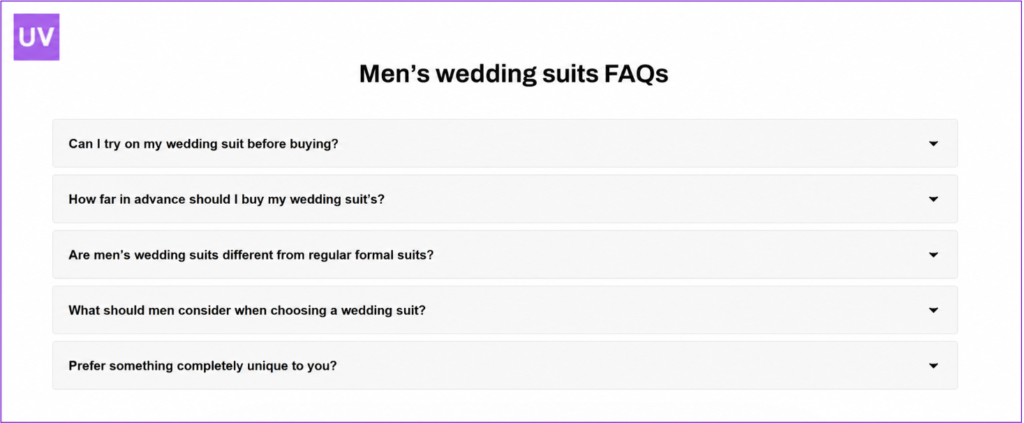
FAQs are excellent for voice search.
Example:
"Do you provide same-day pickup in Dallas?"
"Which local business sells gaming laptops?"
These roughly correspond to spoken questions.
Use Natural Language
Write as people do.
Not like a 2008 robot that was loaded with keywords.
Voice-based queries work better with conversational material.
Track the Right Local SEO Metrics
Many companies are fixated on vanity metrics.
However, perceptions by themselves cannot cover expenses.
Metrics that are connected to real business growth are necessary.
Important Local SEO Metrics to Monitor
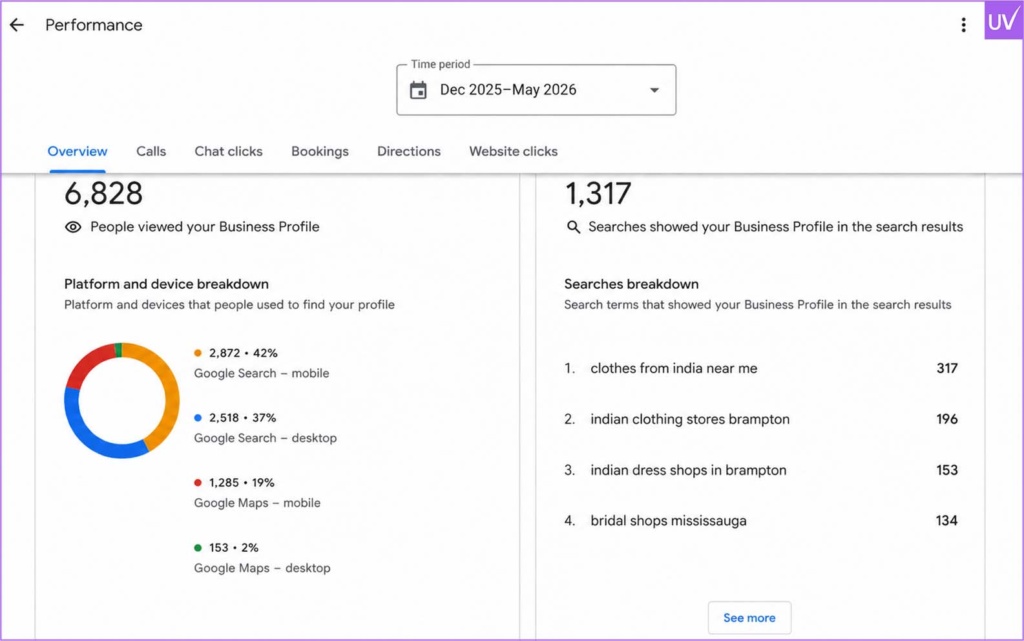
Google Business Profile Insights
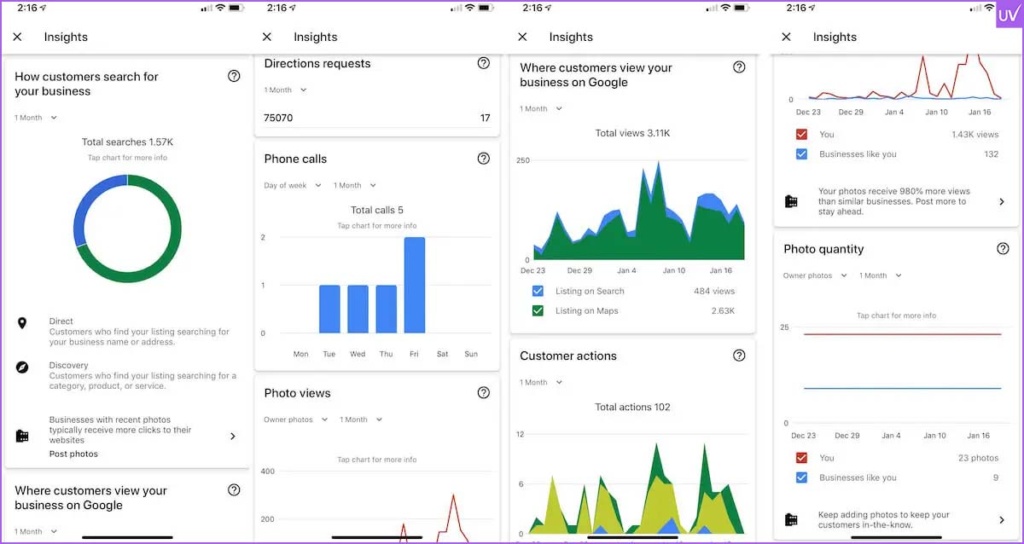
Monitor:
- Calls
- Direction requests
- Website clicks
- Profile views
Local Keyword Rankings
Track rankings for:
- City-based searches
- “Near me” terms
- Local product keywords
Foot Traffic and Store Visits
Evaluate:
- Offline conversions
- In-store purchases
- Pickup orders
Because local SEO, not merely dashboard snapshots, should ultimately boost income.
Final Thoughts
For e-commerce companies with physical storefronts, local SEO is now mandatory.
It's one of the most effective strategies for linking offline sales to online discovery.
Today's top local search brands are doing three things very well:
- Establishing convenience
- Fostering trust
- Remaining visible wherever clients look
In all honesty, that's precisely what contemporary consumers desire.
They seek companies that are:
- Easy to locate
- Reliable
- Quick
- Relevant
You can become all of those things with effective local SEO.
Want to Grow Your Ecommerce Brand Locally?
At Uvisible, we assist e-commerce companies in increasing foot traffic, improving local visibility, ranking higher in Google searches, and converting nearby queries into actual consumers.
From:
- Local SEO campaigns,
- Location page tactics,
- Hyperlocal content marketing,
- Technical SEO,
- Local conversion optimization,
- Google Business Profile optimization
…For companies looking to succeed both online and offline, our team develops growth plans.
Collaborate with Uvisible to start converting local traffic into long-term revenue if your online store includes physical locations, and you're prepared to rule local search results.
About us and this blog
We are a digital marketing company with a focus on helping our customers achieve great results across several key areas.
Request a free quote
We offer professional SEO services that help websites increase their organic search score drastically in order to compete for the highest rankings even when it comes to highly competitive keywords.
Subscribe to our newsletter!
More from our blog
See all posts
Recent Posts
- Zero-Click Searches: How to Still Get Traffic in 2026 June 29, 2026
- WordPress SEO Mistakes That Hurt Rankings June 15, 2026
- E-commerce SEO Audit Checklist for Shopify Stores June 1, 2026
Pingback: Why Your Ecommerce Website Isn’t Ranking (And What Actually Fixes It) - Uvisible