
Your First White Label PPC Report: 6 Must-Have Elements for Beginners
- January 13, 2026
- SEO
What Is a White Label PPC Report?
Think of a white-label PPC report as a beautifully presented performance report that is:
- Fully branded with your agency's name, logo, and colors
- Powered by your preferred pay-per-click reporting program
- Provided to your client as if you had developed the entire platform in-house.
Actually, your white-label reporting software does most of the work behind the scenes.
Because white label PPC for agencies eliminates the need to manually extract data from Google Ads, Meta Ads, Bing, and other sources, agencies love it because it saves them hours every week.
- All of the data is shown on a single white-label PPC audit reporting dashboard that you receive.
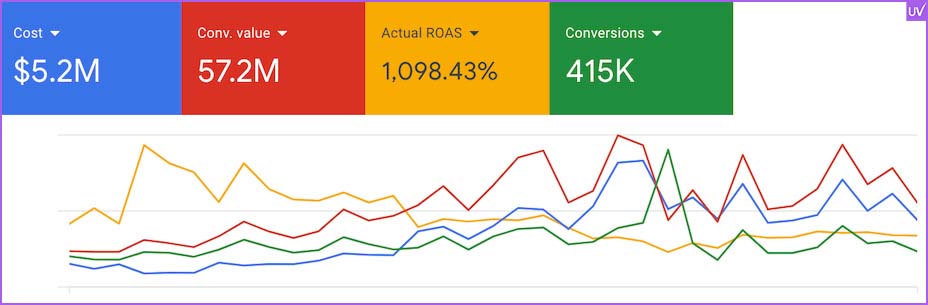
- You come across to your clients as bigger, smarter, and more "tech-enabled."
Agencies claim that reporting and client communication can take up to 40–50% of their time if done by hand, according to a number of industry surveys. That is a huge waste of time for something that can be automated with a good PPC and SEO reporting tool.
Key Problems White Label PPC Reporting Solves
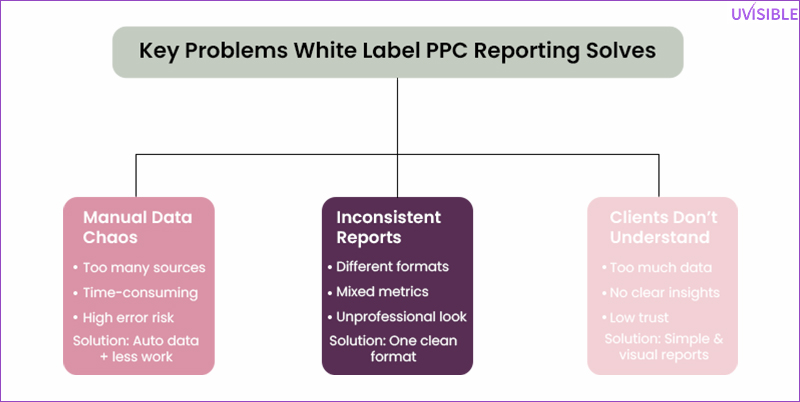
Before we move on to the six crucial elements, let's take care of the problems you are probably currently facing:
1. Chaos with manual data
Pull from Google Ads, export as CSV, make charts in Excel or Google Sheets, insert them into PowerPoint, add your logo, and email the PDF.
If you do this for more than ten clients, you've effectively spent your entire week reporting instead of optimizing.
Whitelabel reporting in a PPC reporting system improved the following:
- Charts are automatically updated, and data is automatically retrieved.
- Automatically generates white-label reports with your logo and branding.
2. Inconsistent formatting and metrics
Each account manager may create reports differently. One sends impressions and clicks, another adds ROAS and CPA, and a third sends screenshots.
A white-label marketing dashboard standardizes the structure, KPIs, and level of detail for every client.
3. Customers "not getting it."
Clients frequently say things like, "I see the numbers... but what does this actually mean for my business?"
Ad spend and business outcomes (leads, sales, revenue) are linked through appropriate white-labeled PPC reporting, which also facilitates visualization.
The 6 Must-Have Elements of Your First White Label PPC Report
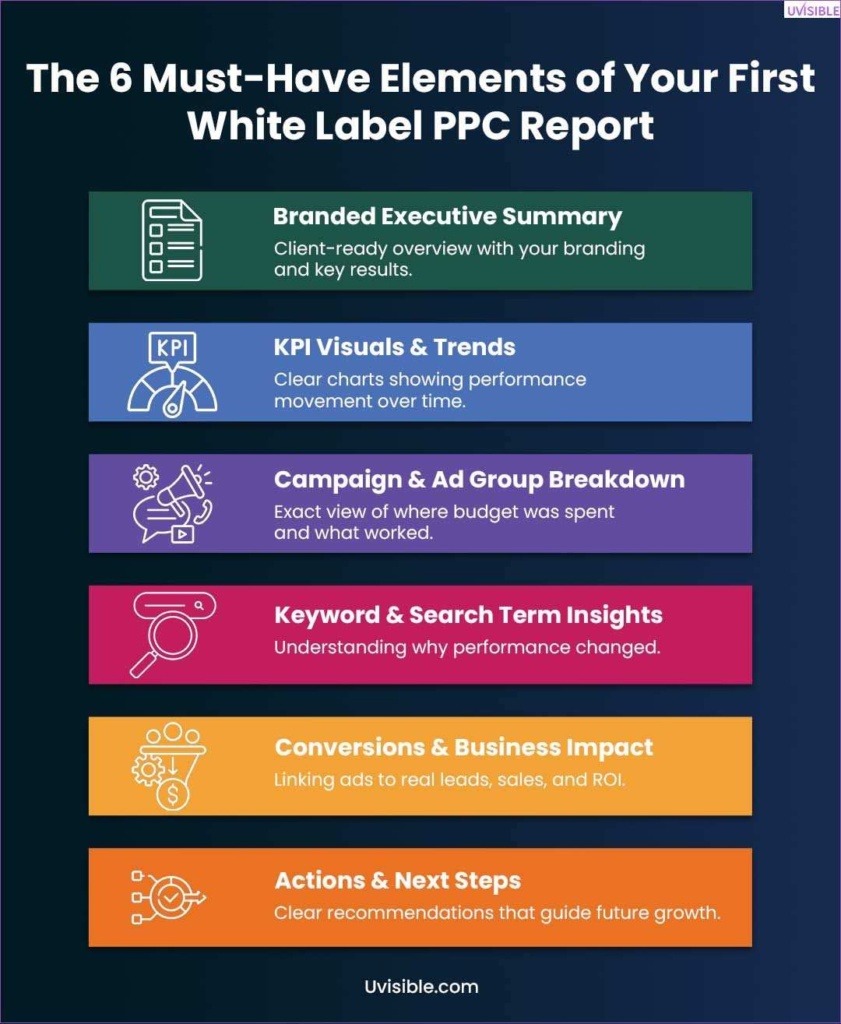
Let's get straight to the point. If you're writing your first white-label PPC report, these six elements ought to be essential.
We'll assume that you're using an agency SEO and PPC audit reporting program or a white-label reporting tool (such as those that integrate with Ahrefs, Google Ads, SEMrush PPC tool, etc.).
1. Client-facing, branded overview (your "Executive Summary")
The first page of your white-label PPC report should be a brief story:
- The client's logo combined with your agency's brand
- The range of reporting dates (e.g., "1st–30th January 2026")
- A summary in plain English
Why it's important
Most decision-makers don't have enough time to look at every chart in detail. The top-level summary in your white-label report shows that you understand their business, not just their metrics.
Professional guidance: Many white-label reporting software applications allow you to type your summary in text widgets within the report itself. Use these to add human context to machine data.
2. Clear KPI Section with Visuals and Trends
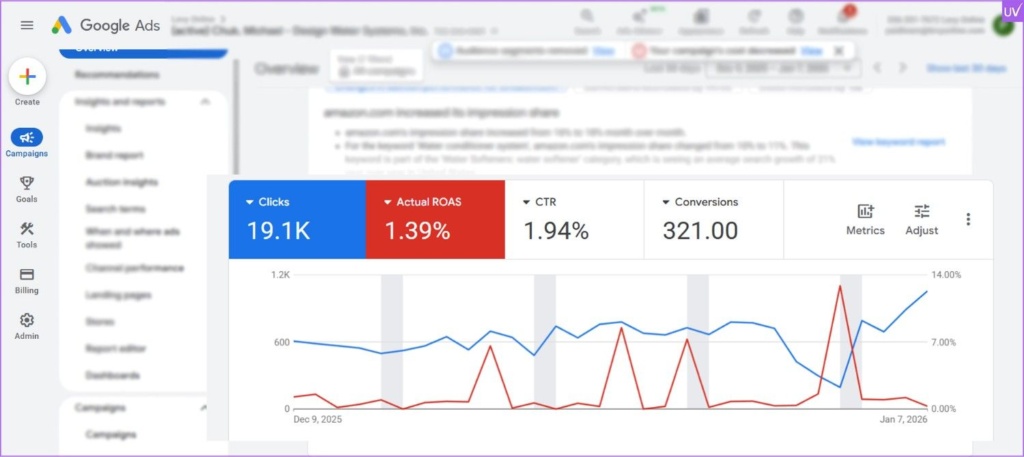
After the overview, your white-label reporting dashboard’s first data-heavy section should focus on the primary ecommerce PPC KPIs:
- Impressions and Clicks
- CTR Average CPC Conversions (leads/sales)
- Cost per Conversion (CPA or CPL)
- ROAS or revenue (if eCommerce)
Use:
- Graphs of trend lines over time
- Bar charts that compare campaigns, for example
- You can compare this time frame with the prior one with the help of an efficient SEO and PPC reporting tool or PPC reporting solution.
- Show the percentage increase or change.
- Breakdown of the display device, geo breakdown, etc.
Tools like the SEMrush PPC tool and SEMrush white label integrations perform well in this scenario since they collect not only ad data but also competition benchmarking and keyword-level analysis.
3. Campaign & Ad Group Breakdown (Where the Money Actually Went)
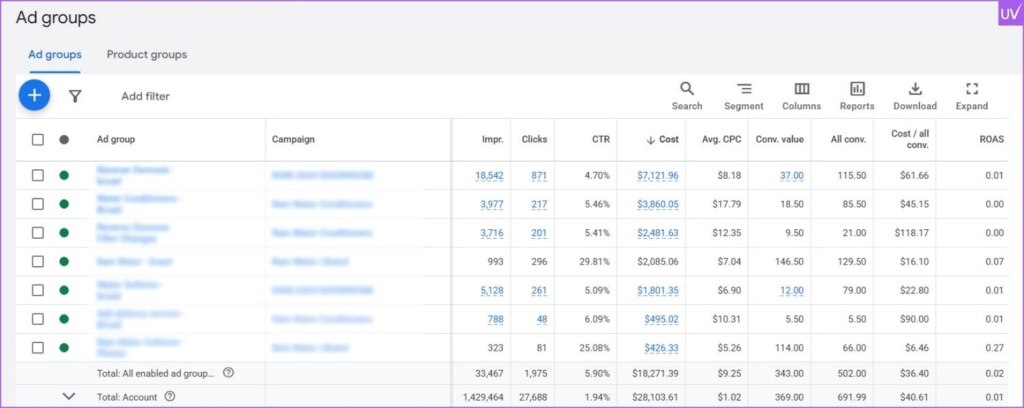
Customers will eventually ask the important question, "Which initiatives are actually bringing us money?"
A transparent table at the campaign level in your white-label PPC report needs to show:
- The campaign's name
- Invest in Conversions and Clicks
- CPA/CPL ROAS (if relevant) rate of conversion
You can then decide to segment by ad group.
This section will address:
- Which campaigns should receive greater funding?
- Which ones are not doing well?
- Where to explore new things or make cuts
You may choose exactly which metrics and columns to display with most agency SEO and PPC reporting software. If you are a newbie, avoid overburdening the customer with 25 metrics. Focus on six to eight important ones.
4. Keyword & Search Term Insights (The “Why” Behind Performance)
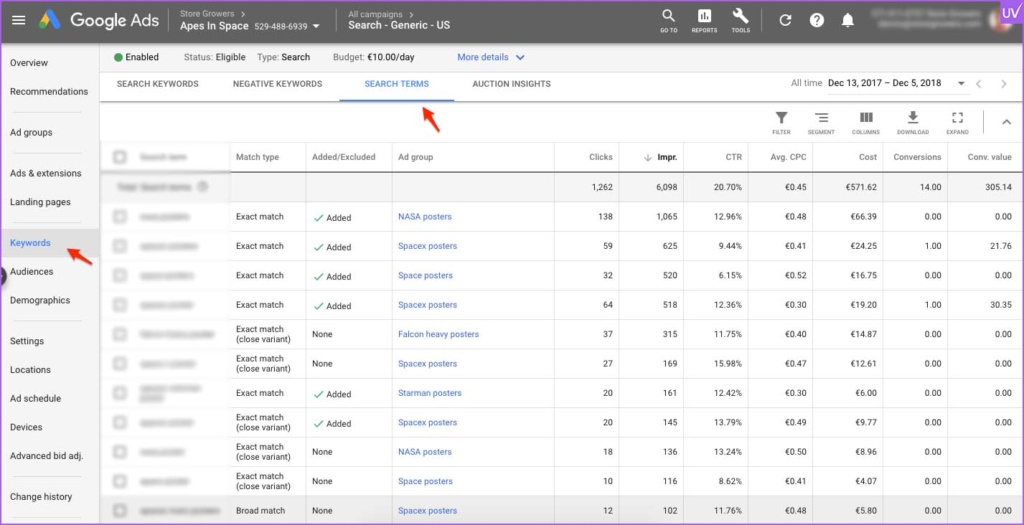
This is the area where your white-label SEO, SEM reports, and PPC efforts overlap. Your keywords are the connection between PPC and SEO.
Your white-labeled PPC report should contain the following information:
- Top-performing keywords (based on conversions and low CPA)
- The keywords that perform the poorest (high expense, little to no conversions)
- Important search phrases that led to the appearance of your ads
- You added new negative keywords to improve relevancy.
Your SEO and PPC reporting tool or white-label SEM solution can assist in the following ways:
- It is feasible to collect direct keyword data from PPC tools, such as Ahrefs or SEMrush or ubbersuggest.
- You can show a white-label Ahrefs report for backlinks and organic keywords in addition to PPC statistics. Instead of just calling yourself "ad managers," you may position yourself as partners in search strategy.
When your report shows that you are optimizing and improving keywords, clients may understand that they are paying for ongoing improvement rather than just clicks.
5. Conversions, Funnels & Actual Business Impact
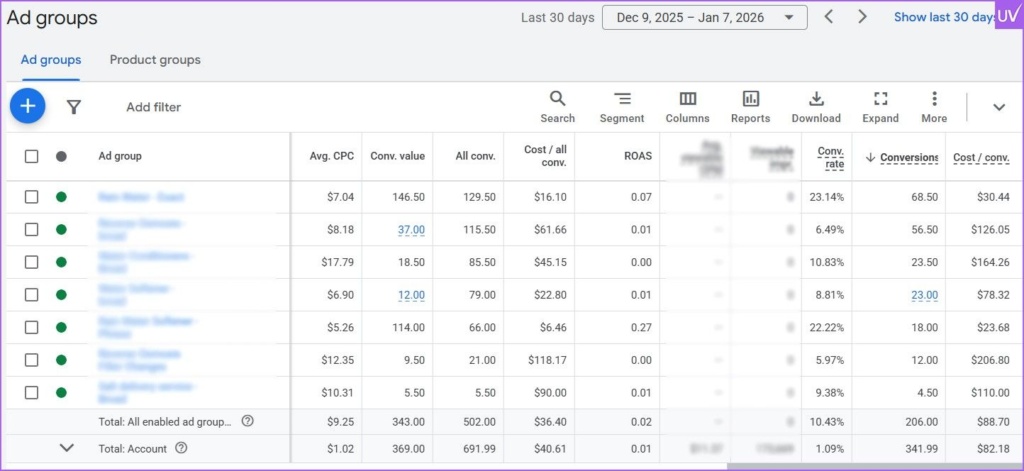
Clicks are cute, but what matters most are conversions.
Your white-label reporting dashboard should make this clear:
- Total conversions (purchases, leads, calls, and sign-ups)
- Cost per conversion, or CPL/CPA
- Conversion rate
- If at all feasible: Measures of actual or projected revenue for funnels:
- Choose → Landing Page View → Form Submit it.
The question that a successful white-label PPC report will address is:
- "This month, how many leads did we acquire from PPC?"
- "What was the approximate cost of one lead to us?"
- "Is it getting better or getting worse from the last quarter or month?"
If your agency's SEO and PPC monitoring software or ppc reporting solution supports multi-channel tracking, you can even show:
- How PPC aids in conversions initiated by organic or direct traffic
- Which campaigns are early in the funnel and which are final-click?
Tools with white-label marketing dashboard features shine when it comes to connecting PPC data with CRM, call monitoring, or analytics platforms and displaying the complete journey while preserving your agency's identity.
6. Actions, Recommendations & Next Steps (Your Secret Differentiator)
For most beginners, "Here are the numbers" is the ultimate result.
"Here's what we're going to do next" is how experts go above and beyond.
Your white-label PPC report should always conclude with a section like this:
Campaign Plans for Next Month
- If the CPL is smaller, A's budget ought to be raised.
- Stop spending a lot of money on underperforming keywords X, Y, and Z that don't convert.
- Test three new ads with benefit-focused titles.
- Launch a retargeting campaign for clients who put things in their carts but didn't buy anything.
This turns your report from a history document into a strategy document.
Many white-label reporting software systems allow for custom comments, remark sections, and even the ability to attach white-label SEO reports as extra PDFs. Use that to show that you are proactive.
Where Tools Like SEMrush & Ahrefs Come In

You stated:
- SEMrush PPC tool
- SEMrush white label / SEMrush whitelabel
- white label Ahrefs report
They fit into your white-label reporting environment in the following ways:
SEMrush PPC & whitelabel integrations
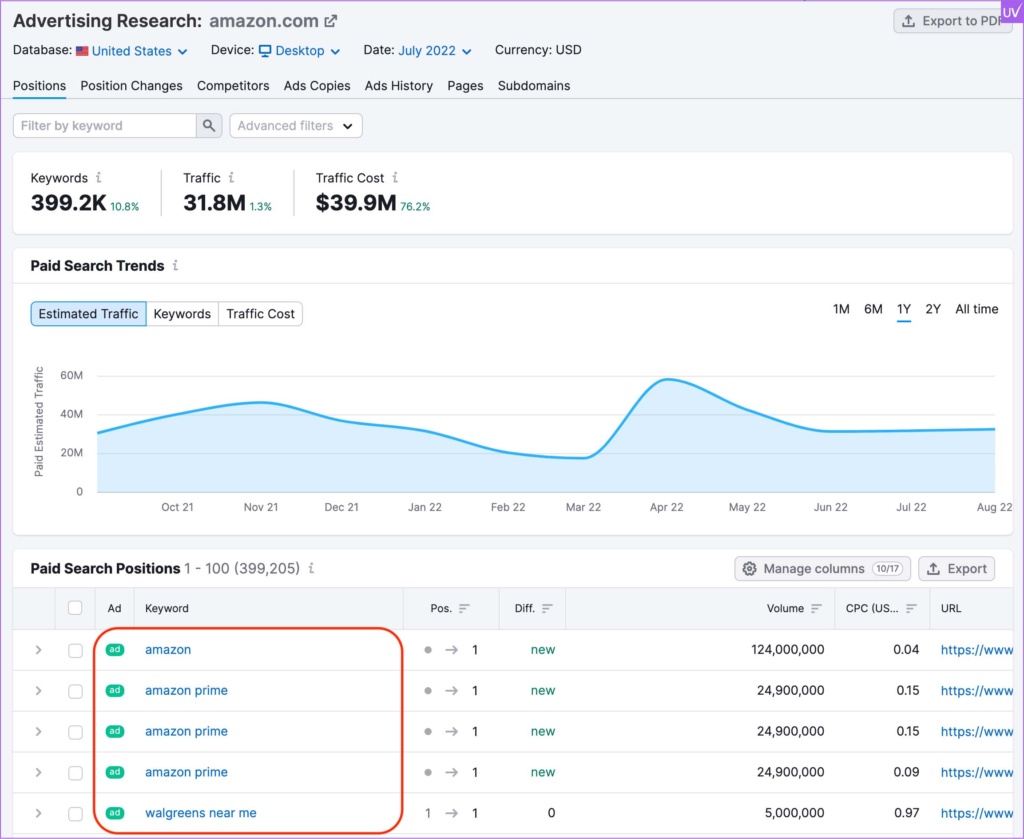
- Use the SEMrush PPC tool to measure:
- Competitor ads
- Keyword gaps
- Estimated traffic and CPCs
- SEMrush white label or SEMrush whitelabel style exports allow you to:
- Generate branded reports
- Include images of competitors and keywords in your white-label SEM and SEO reports
- Integrate SEO + PPC in one white-label SEM narrative
Ahrefs and white-label reports
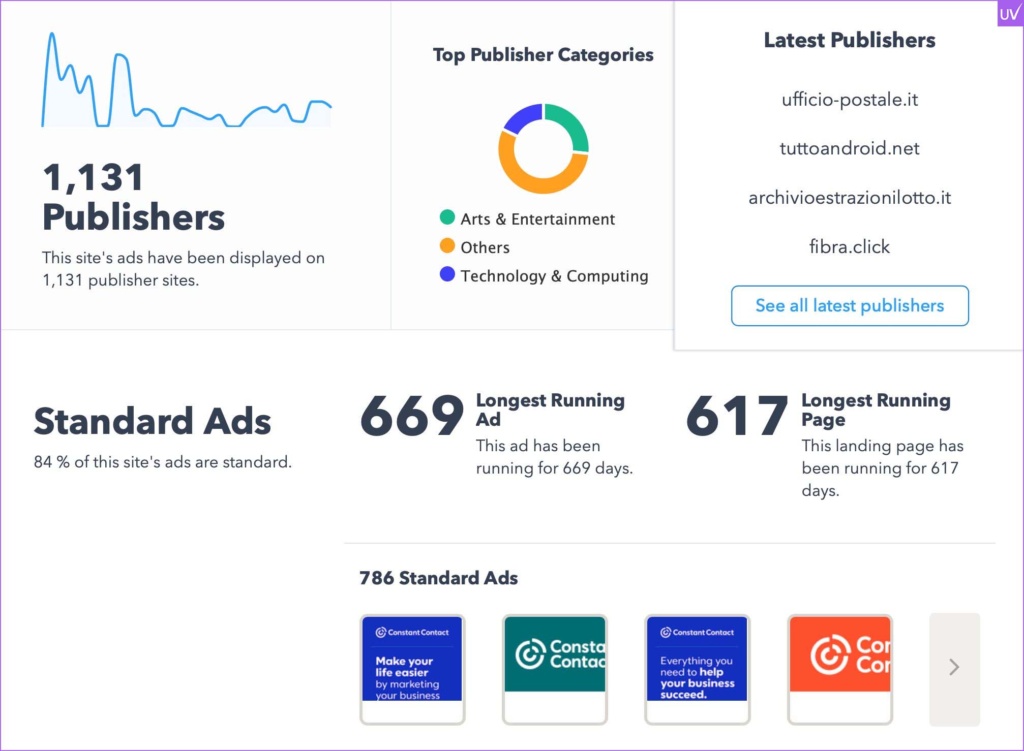
- Use Ahrefs for:
- Organic keywords
- Backlinks
- Content gaps
- Next, export a white-label Ahrefs report and either:
- Include it in your main white-label PPC report
- Or combine insights into one unified white-label report inside your white-label reporting dashboard
Result?
"Here's how your paid search and organic search are functioning together," you tell your clients.
Choosing the Right White Label Reporting Software
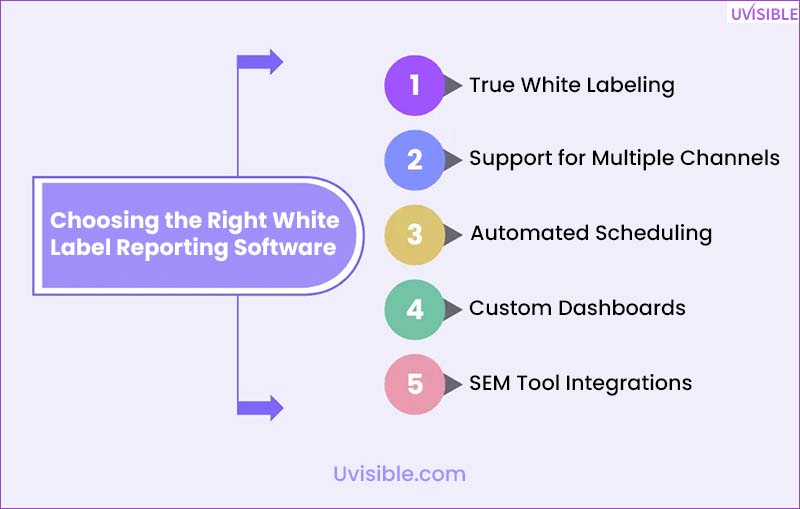
How do you choose one of the many programs marketed as agency SEO & PPC reporting software, white label reporting software, or white label reporting tool?
Here are some basic requirements:
- True White Labeling
- Can you add your custom domain, brand colors, and logo?
- Does the login process feel more like your company than a generic SaaS?
- Support for Multiple Channels
- Does it support Bing, LinkedIn, Google Ads, Meta Ads, etc.?
- Does it function as a single tool for PPC and SEO reporting?
- Automated Scheduling
- Is it possible to automate the sending of weekly or monthly white-label reports?
- More tranquility and less "first of the month panic."
- Custom Dashboards
- Can you create a white-label marketing dashboard using your own KPIs and layout?
- Different clients have different needs when it comes to e-commerce, lead generation, and SaaS.
- SEM Tool Integrations
- Data from Ahrefs, SEMrush, etc., can be plugged in.
- This is how you provide effective white-label SEO and SEM reports in addition to PPC.
How a Solid White Label PPC Reporting Setup Transforms Your Agency
Let’s recap the impact in real-life terms:
1. Time saved = More billable work
Agencies can save dozens of hours every month by using white-label reporting software instead of handwritten spreadsheets. You can use that time to:
- Optimization of campaigns
- A/B testing
- Calls to strategy
- Upselling additional services
2. You look premium (even if your team is small)
You appear to have created your own proprietary software when you have a neat white-label reporting dashboard with your branding.
Unconsciously, clients think, "Wow, these guys are serious." They have a reporting system of their own.
You may charge more and keep customers longer thanks to that perception.
3. Clearer communication = Fewer “What’s happening?” emails
When customers receive clear, branded, white-labeled PPC reports regularly, they can monitor the trend over time and know where their ad spend is going.
They are aware of your strategy.
Relationships are smoother, there are fewer panic emails, and there are fewer misunderstandings.
Final Thoughts: Start Simple, But Start Now
A 50-page mega-deck is not necessary for your initial white-label PPC report.
You're already ahead of most novices if you incorporate these six fundamentals:
- Executive summary with branding
- A concise KPI summary with images
- Breakdown of campaigns and ad groups
- Keyword and search term analysis
- Conversions, funnel, and business impact
- Recommendations and next steps
Apply the appropriate pay per click advertising agency. When you integrate technologies such as SEMrush PPC tool, SEMrush whitelabel, and white label Ahrefs report with SEO and PPC reporting software, you will have a reporting system that:
- Appears polished.
- Operates (mostly) automatically
- Actually increases the outcomes for your clients.
Ready to Simplify Reporting and Impress Clients?
You don't have to figure out how to create, prepare, and transmit white-label reports on your own if it still seems overwhelming.
Uvisible assists agencies in creating scalable, user-friendly reporting solutions that automate tedious reporting tasks, show data in a way that clients truly comprehend, and combine SEO, PPC, and analytics into a one dashboard.
Even if you're just getting started, let's make you look like a pro agency by streamlining your white-label reporting.
Get in touch with Uvisible right now to see how a more intelligent reporting configuration may increase your revenue, retain clients, and save time.
FAQ: White Label PPC Reporting for Beginners
1. What exactly is a white-label PPC report?
A client-facing performance report produced with third-party reporting software that is completely branded with your agency's name, logo, colors, and domain is known as a white-label PPC report. It seems to clients to be your internal reporting system.
2. Do I need expensive tools to start white-label reporting?
Not always. For small agencies, a number of white-label reporting solutions provide reasonably priced options. As you grow, add SEMrush, Ahrefs, and other integrations after starting with basic ones like Google Ads, Analytics, and Meta.
3. Why are white-label dashboards better than spreadsheets?
Spreadsheets are error-prone and need to be updated manually.
Every month, a white-label reporting dashboard saves hours by automatically pulling data, updating in real time, and delivering consistent results.
4. Can I combine SEO and PPC in one report?
Yes, and you ought to. Clients may observe how organic and paid initiatives complement each other by using a single SEO and PPC reporting platform. White-label SEO and SEM report-generating tools make this seamless.
5. How often should I send PPC reports to clients?
For higher ad expenditures, the majority of agencies provide brief weekly summaries in addition to monthly reports. This is made simple by white-label reporting software's automated scheduling.
6. What metrics matter most to clients?
Customers are more concerned with results than clicks. Conversions, cost per lead, ROI/ROAS trends over time, and specific next-step suggestions should be the main focus of your white-labeled PPC reports.
7. Can Uvisible help with reporting setup?
Absolutely. Uvisible collaborates with agencies to develop branded dashboards, connect PPC and SEO technologies, select the best white-label reporting software, and produce report templates that clients genuinely enjoy reading.
About us and this blog
We are a digital marketing company with a focus on helping our customers achieve great results across several key areas.
Request a free quote
We offer professional SEO services that help websites increase their organic search score drastically in order to compete for the highest rankings even when it comes to highly competitive keywords.
Subscribe to our newsletter!
More from our blog
See all posts





Recent Posts
- How SEO Works in Bing (And Why Ignoring It Might Be Costing You More Than You Think) February 27, 2026
- Things Every Website Should Have: The Complete SEO Blueprint February 14, 2026
- Digital Marketing Conferences 2026: Top Global Events for Marketing Leaders February 7, 2026