
When SEO seemed like a tidy little playbook, do you recall? Boost your rankings by obtaining backlinks, stuffing keywords, and pleading with the algorithm gods.
Those days are over, though.
These days, while we attempt to maintain control over the chaos, Google's algorithms think, ChatGPT writes, and AI systems determine what is "authoritative."
The game has changed rather than vanished. In the AI era, off-site SEO is more about how AI understands links to you than it is about who links to you. Building links is no longer sufficient; you also need to create machine-understandable trust ecosystems.
That’s where partnering with a white label SEO agency becomes valuable — they’re equipped to build these AI-recognized authority signals at scale while keeping your brand front and center.
Google's algorithm is now more "cognitive" than ever, thanks to the integration of RankBrain, BERT, MUM, and the soon-to-be Gemini. It interprets intent, entity relationships, and context in addition to simply scanning links.
Stated differently, "AI is now the brain interpreting it, but backlinks are still the heartbeat of authority."
Thus, the battlefield has changed. Additionally, you must learn how to create brain links in addition to backlinks if you want to dominate.
From Backlinks to Brain Links: How AI Redefines Authority
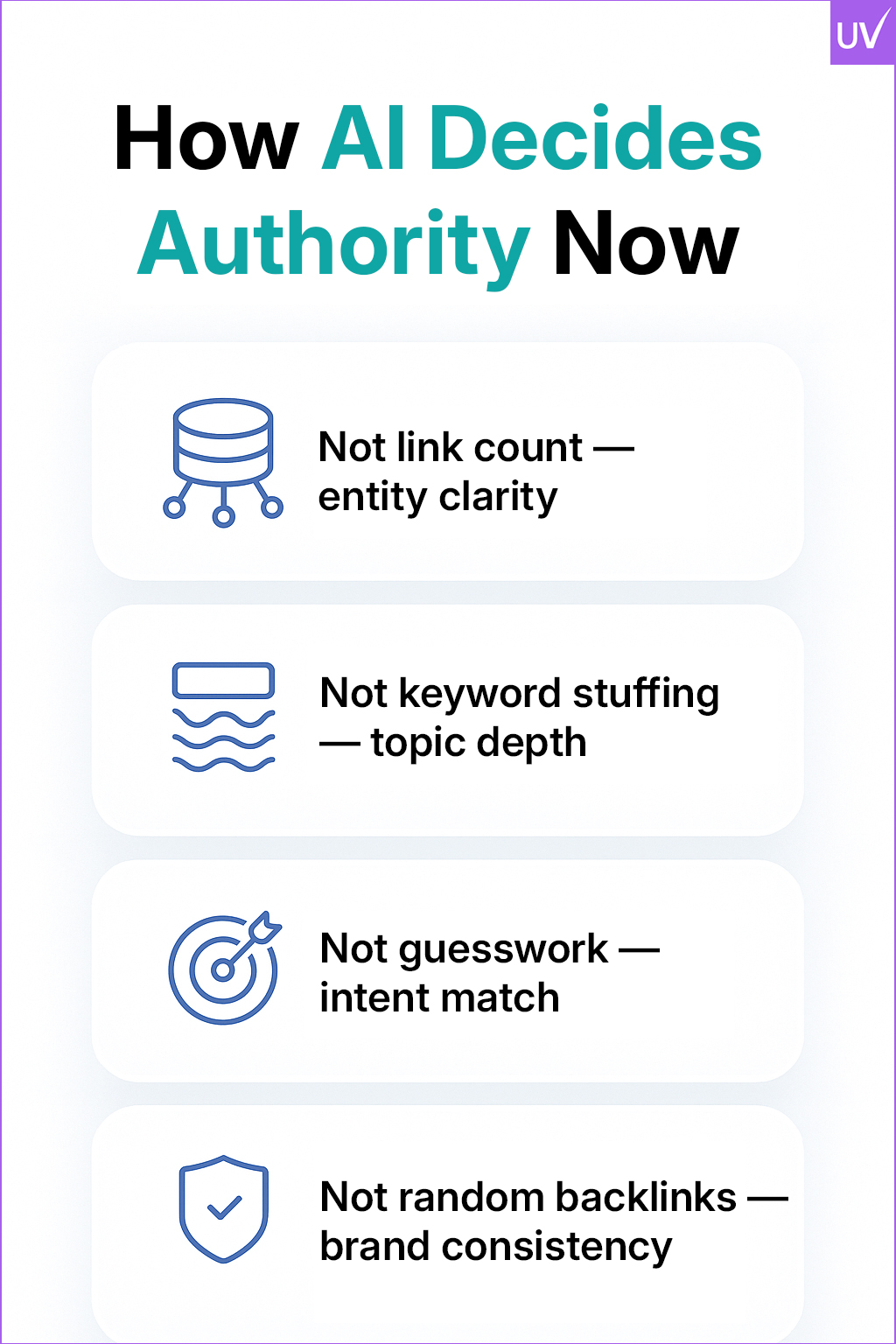
Link building used to be a numbers game, let's face it. Your domain authority increased with the number of backlinks you had. Easy math, huh?
However, AI understands links rather than counting them.
Beyond "who links to whom," Google's more recent models (such as MUM and RankBrain) now consider "why this link exists and how it connects to topic relevance."
This change gave rise to what I like to refer to as Brain Links, which is AI's method of comprehending contextual authority.
This is how it operates:
- AI now favors five context-rich mentions from semantically related domains over 500 random backlinks. And if you’re still chasing bulk links without context, you might actually be dealing with toxic backlinks hurting SEO the kind that confuses Google’s understanding of your authority instead of reinforcing it.
- Because it understands entity relationships, it will presume that you are a part of the authority cluster when your brand name appears next to well-known authorities in your niche, such as HubSpot, Semrush, or Moz.
- Additionally, it deciphers co-occurrence signals, which means that your "topic authority" increases if you are regularly discussed in the same semantic context as important industry players.
In other words, "who's shouting your name" doesn't impress the AI. It seeks to determine who is saying it, when, and how frequently.
"In the AI era, nuance, not noise, is what establishes authority."
The Death (and Rebirth) of Link Building

Now, before you throw out your link-building strategy, don't.
Link building is still going strong. It has simply changed.
We'll refer to it as the link-building renaissance.
SEO experts flourished on directory submissions, PBNs, and guest posts prior to artificial intelligence. However, AI-driven algorithms have improved; they can now recognize manipulative link velocity, detect link farms, and downgrade patterns that are obviously "unnatural."
Dubious backlinks are now radioactive due to tools like SpamBrain and Link Spam Update 2023.
The twist is that high-quality link building is now more effective than before.
Why? Because AI learns from your backlinks, it does more than just check them. Analyzing competitor backlinks, for instance, can reveal the kind of authority signals that are helping rival sites outperform yours — and help you replicate that quality strategically rather than blindly chasing volume.
AI begins to associate your brand with authority in that field of knowledge if it is regularly referenced in reliable contexts, such as in thought leadership blogs, research, or a roundup of the "Top 10 AI SEO Companies."
Today's SEOs are moving in the direction of:
- Link prospecting with AI assistance: locating pertinent link opportunities with the aid of programs like BuzzStream, Frase, or SurferSEO.
- Storytelling and digital PR: Creating narratives that organically draw backlinks.
- Establishing interconnected clusters that support expertise is known as semantic content linking.
In other words, link building has not died. AI simply made it mature.
"Link forests were created by AI, but link farms were destroyed."
Authority Beyond Links: The New Signals AI Watches Closely

The truth bomb that most marketers overlook is this: Backlinks are just one aspect of AI.
These days, it assesses dozens of offsite signals that influence your online authority, many of which are unrelated to conventional links.
The new signals of authority are as follows:
- Unlinked Brand Mentions: AI notices even when your name is mentioned without a hyperlink.
- E-E-A-T: Experience, expertise, authority, and trust are the E-E-A-T factors. The foundation for Google's credibility assessment, particularly after the Helpful Content Update.
- Sentiment Analysis: AI crawlers are now able to "read the tone" of online reviews and conversations.
- Topical Consistency: Do your off-site mentions thematically relate to your niche?
- The pinnacle of semantic authority is the presence of a knowledge graph.
Consistency, not backlink counts, is the reason why brands like Canva, Ahrefs, and Notion succeed. A consistent authority narrative is created by their digital footprint, which includes mentions, guest posts, and partnerships.
AI seeks patterns; it wants to see you everywhere, but it also wants to see you as relevant everywhere.
"Authority is now about validity rather than visibility."
The Chaos Factor: Controlling Reputation and Misinformation
This is where things start to get messy.
Your brand reputation is now determined by what machines infer about you rather than just what you say about yourself, as AI crawlers and LLMs (such as ChatGPT, Gemini, and Perplexity) begin gathering data from the internet.
Understanding the impact of AI on SEO is crucial here — because these systems don’t just index data; they interpret tone, sentiment, and authority, shaping how your brand is perceived algorithmically.
This is the element of chaos.
An old Quora response, a few ignorant Reddit posts, or a bad review can all have a subtle negative impact on how AI systems perceive your brand.
For this reason, the new offsite SEO pillar is AI reputation management.
Tools that track sentiment, mentions, and possible false information, such as Brand24, Mention, and Semrush Brand Monitoring, are essential.
The trick?
- React quickly to false statements.
- Make sure your author entities, LinkedIn bios, and About pages are accurate.
- Provide clean, factual signals regularly to AI platforms (such as Wikipedia entries, structured data, and schema markup).
Brands with control over their data narrative, rather than just those with backlinks, will prevail in 2025.
"In the era of artificial intelligence, your reputation is trained rather than created."
Smart Offsite SEO Strategies for 2025 & Beyond
Now, let's get down to business.
These six astute offsite SEO tactics will help you remain relevant in the AI era, where reputation, context, and authority are more intertwined than ever.
1. Create Content Ecosystems That Are AI-Understandable
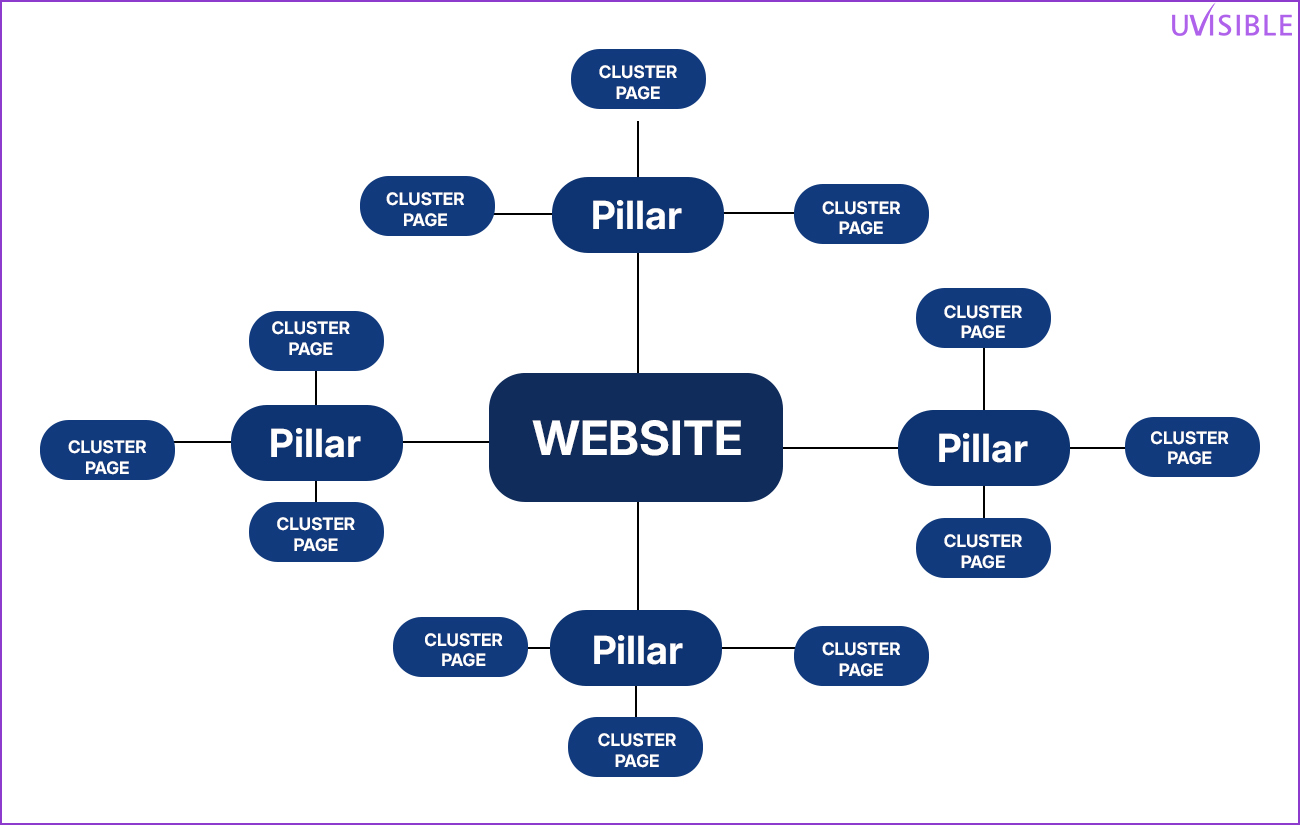
Organize your website into entity-based clusters, each of which focuses on a different subject. This aids AI in mapping your Knowledge Graph expertise.
2. Use AI-Powered Tools to Prospect Smart Links

Utilize AI-powered tools (such as Respona or Pitchbox) to find pertinent link sources and automate personalized outreach.
3. Give Brand Mentions More Weight Than Backlinks

Encourage customers, partners, and journalists to mention your brand organically, even if they don't include a link. The context is picked up by AI.
4. Make an AI-Powered Digital PR Investment
Syndicate content across authority platforms, publish thought leadership, and work with micro-influencers.
5. Adhere to Schema and Structured Data
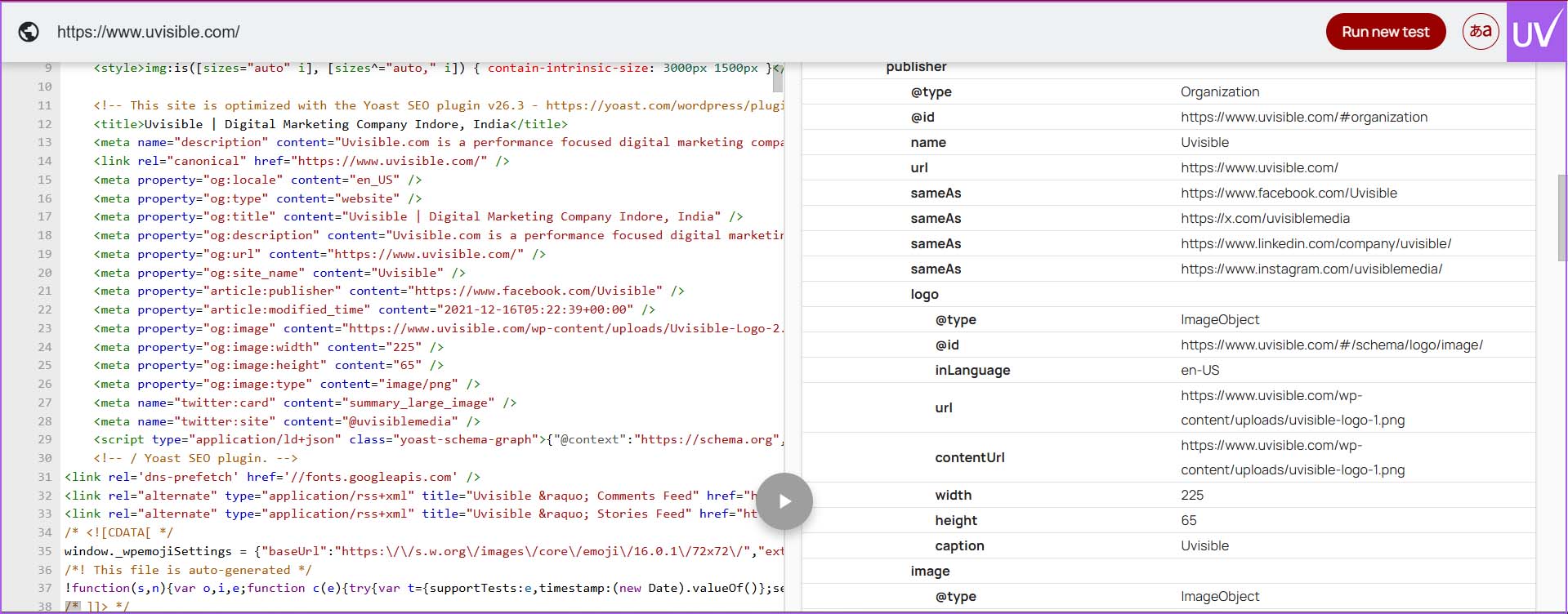
To assist AI systems in confirming your legitimacy, feed them structured data such as author names, organization information, and reviews.
6. Examine, Assess, and Modify
In the AI era, quarterly SEO moves quickly. Utilize SEO reporting tools such as Ahrefs, Semrush, and Google Search Console to track the sentiment and velocity of backlinks.
These tactics make your brand "AI-friendly" while maintaining its genuine visibility by bridging the gap between human reasoning and machine learning.
"Build signals instead of chasing links."
Future Forecast: When AI Becomes Your PR Manager

Let's now examine the crystal ball.
AI will determine what content is worthy of sharing in the coming years, not just index it.
Consider it this way:
You will be pitching algorithms rather than journalists.
Brand mentions are beginning to be automatically curated by LLMs such as ChatGPT, Perplexity, and Google's SGE (Search Generative Experience). Even in the absence of conventional rankings, AI will start mentioning you in responses if your brand is regularly and contextually cited in trustworthy sources.
Thus, the next generation of link building focuses on visibility inside AI's training data rather than hyperlinks.
Brands must prepare for:
- AI-powered content dissemination (through forums, podcasts, and micro-content)
- Validation of entities (uniform brand, author, and product information on all platforms)
- Predictive SEO tactics: predicting the next developments in AI
"Bots may provide tomorrow's backlinks instead of blogs."
Order Amidst the Algorithmic Storm
Let's connect everything.
Algorithms and art have always coexisted in the SEO space, but with AI taking the lead, this dynamic is rapidly changing.
In the AI era, off-site SEO is more than just links, mentions, and DA. It's about giving intelligent systems the correct signals so that your brand appears as a reliable entity when AI interprets the web.
Marketers must transition from link builders to authority architects if they want to succeed.
- Manage the mentions of your brand.
- Organize your material to aid in semantic understanding.
- Create ecosystems of trust that AI cannot misunderstand.
"AI made SEO smarter, faster, and infinitely more human—it didn't kill it."
Final Thoughts
We are about to enter a time when power is calculated rather than bestowed.
Additionally, someone else will have control over how AI interprets your brand if you don't.
The experts can help with that.
At Uvisible, we specialize in SEO services powered by AI — strategies that merge intelligent link development, entity optimization, and storytelling.
By converting chaos into clarity and data into dominance, we assist brands in establishing authority that even AI cannot ignore.
Are you prepared to use AI to improve your off-site SEO?
Visit uvisible.com to take charge of the algorithmic storm and start future-proofing your authority right now.
About us and this blog
We are a digital marketing company with a focus on helping our customers achieve great results across several key areas.
Request a free quote
We offer professional SEO services that help websites increase their organic search score drastically in order to compete for the highest rankings even when it comes to highly competitive keywords.
Subscribe to our newsletter!
More from our blog
See all posts




Recent Posts
- How SEO Works in Bing (And Why Ignoring It Might Be Costing You More Than You Think) February 27, 2026
- Things Every Website Should Have: The Complete SEO Blueprint February 14, 2026
- Digital Marketing Conferences 2026: Top Global Events for Marketing Leaders February 7, 2026